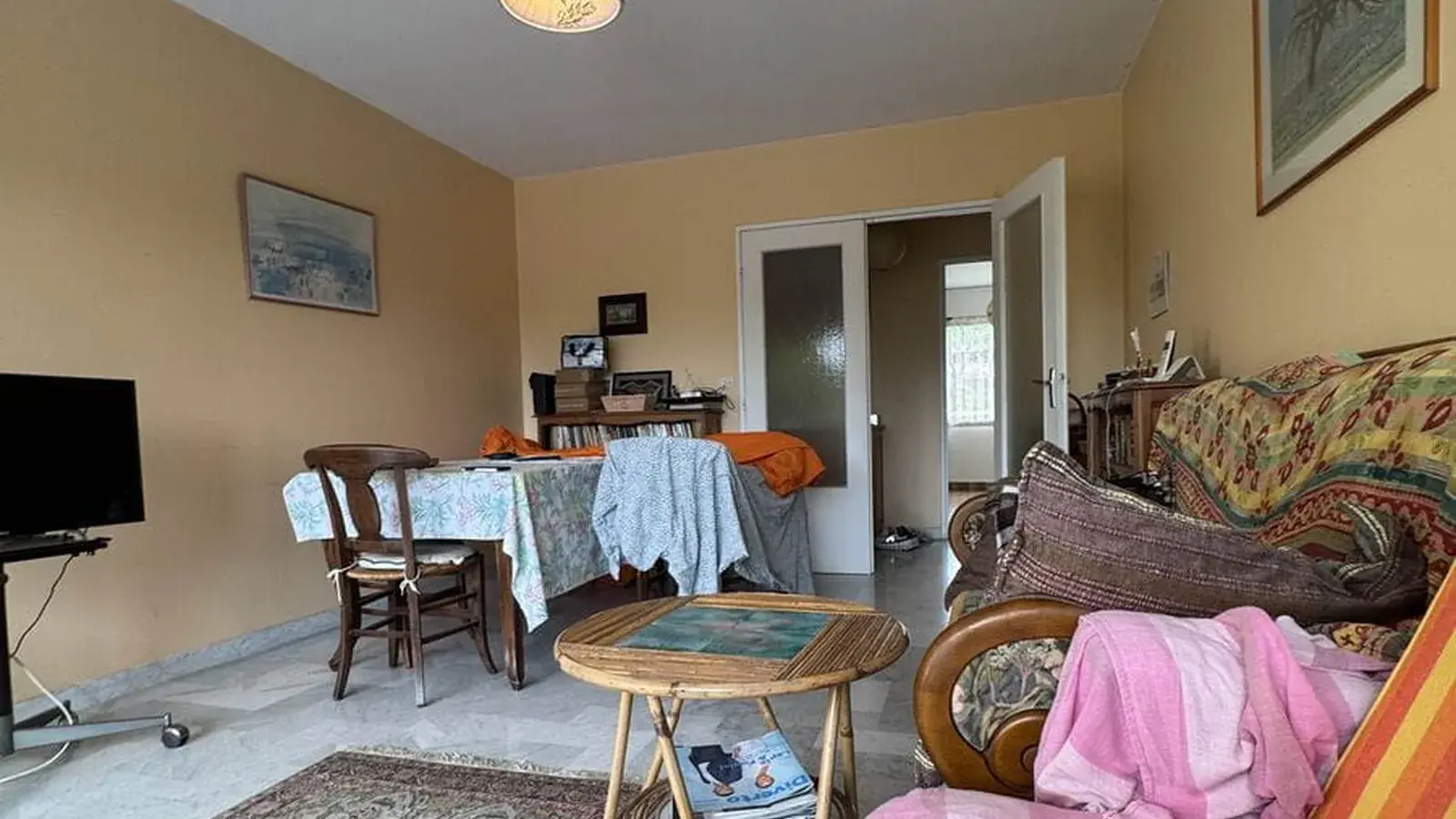
An occupied home might be a seller still living there, or a tenant who stays while the landlord sells or relets. Listing photos are public. They show a child's bedroom, a home office, sometimes a letter left on a table. The legal part below covers French law only; rules elsewhere differ and are not covered here. The practical part applies anywhere. This is not legal advice.
What French law says
Private life. Article 9 of the French Civil Code states that everyone has the right to respect for their private life, and lets judges order measures to stop an intrusion into it.
People's image. According to the French government's Service-Public.fr page on image rights and privacy, using an image in which an adult is recognisable requires their written consent. For a minor, written consent from the parents is required when a third party publishes the image. The page is flagged as being updated.
Viewings with a tenant. Article 4 of French law no. 89-462 of 6 July 1989 voids any lease clause requiring the tenant, for a sale or relet, to allow viewings on public holidays or for more than two hours on working days. The text covers viewings, not photos.
The image of the property. In a ruling of 7 May 2004 (no. 02-10.450), the full court of the Cour de cassation held that the owner of a thing has no exclusive right over its image, but can object to its use by a third party when it causes them an abnormal disturbance.
Agreeing the shoot beforehand
None of the texts above requires written permission to photograph a home. Written agreement is still good practice: it records what was agreed and avoids disputes after publication. What follows is advice, not a legal requirement.
- Explain how the photos will be used. Listing portals, the agency website, social media: say where and for how long.
- Book a slot. With a tenant, follow the viewing rules: a working day, not a public holiday, and keep it short. Offer several dates.
- Send a preparation list. Occupants tidy better when they know in advance what must be out of frame.
- Ask which rooms to shoot. The occupant may prefer a home office or a child's room to be photographed cleared, or not at all.
- Keep a record. A confirmation email is often enough: date, rooms, use of the photos. Offer to show the selection before it goes live.
A seller who lives in the home is also the owner. With a tenant, keep the landlord informed too, since the landlord gives the mandate.
What to hide or remove
The aim is a photo that shows the home without revealing who lives there or how to get in. Walk through with the occupant before the first shot.
- People. Nobody in frame, including in a mirror, a window or a blank screen. Pets out of frame too.
- Family photos and portraits, framed or on the fridge.
- Documents: mail with names and addresses, bills, prescriptions, calendars, whiteboards, children's drawings signed with a first name.
- Children's rooms: names on doors or walls, class photos, timetables.
- Valuables: jewellery, artwork, computer equipment, collections, a safe.
- Security: alarm keypads, cameras, key boxes, keys on a hook.
- The view from the window: street numbers, number plates, names on letterboxes.
- Religious or political items, which relate to private life.
Tidy rather than edit when you can: an item taken out of the room leaves no trace in the image.
What editing can and cannot do
Whatever was missed can be handled afterwards. In ImmoPhoto:
- Remove an item: paint over it with the brush (three sizes), fix the selection with the eraser, and it is replaced with its surroundings. Useful for a photo frame, a letter or an alarm keypad left in view.
- Declutter: removes small clutter from the whole photo in one go and keeps the furniture.
Check the result full screen, especially where there was text: a half-erased name can still be read. Check reflections too. More in our article on removing objects.
Editing stops at the occupant's belongings. In France, article L121-2 of the Consumer Code defines a commercial practice as misleading when it relies on false or misleading presentations, in particular about the essential characteristics of a product. Never erase a crack, a damp patch, a damaged surface or a fixture sold with the home.
Neighbours and surrounding buildings
Outdoor shots and views from windows often show the street and the neighbours. Avoid framing a recognisable person in a neighbouring garden or at a window opposite: the same image rule applies to them.
For a neighbouring building in the background, the 7 May 2004 ruling holds that an owner has no exclusive right over the image of their property, unless there is an abnormal disturbance. That is no reason to erase it: the surroundings are part of what a buyer needs to know.